
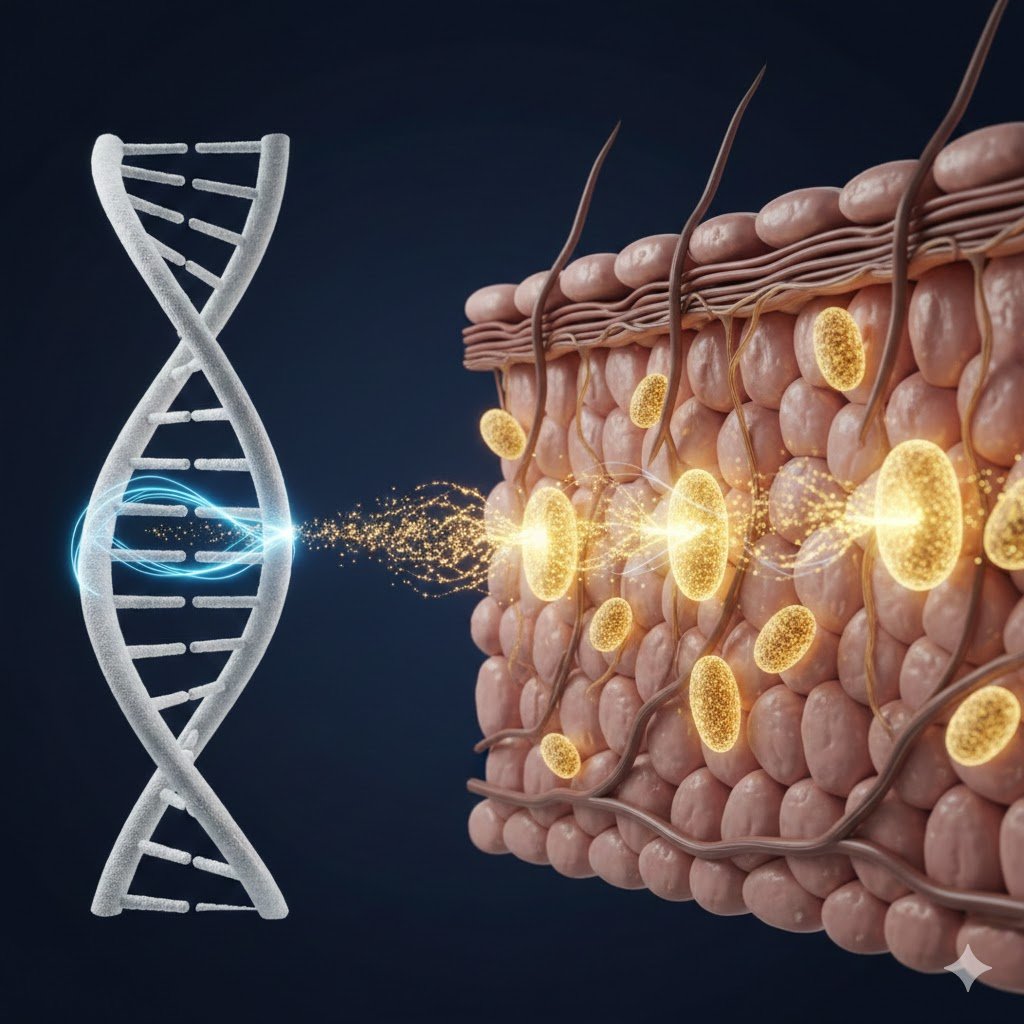

Let’s be real for a minute. If you’re like me, you’re tired of the term “anti-aging.” It feels like a battle we’re destined to lose, and frankly, the marketing is exhausting. In my Recovery Lab, I’ve shifted the conversation entirely toward skin longevity.
Why? Because aging isn’t just about the fine lines you see in the mirror; it’s a biological energy crisis happening deep within your cells. If your skin looks dull or “laggy,” it’s usually because your mitochondrial health is declining. Think of your mitochondria as the “batteries” for your skin cells. When the battery is low, no amount of expensive cream can “jumpstart” your glow. True Skin Longevity starts with recharging that cellular battery.
Why Your Skin Feels ‘Laggy’ (The ATP Gap)
In my audit of Skin Longevity, I’ve identified a specific behavior I call “Skin Lag.” You know that feeling when you wake up and your pillow creases stay on your face for two hours? Or when a small breakout takes three weeks to heal instead of three days? That is Skin Lag.
Scientifically, this is an ATP (Adenosine Triphosphate) deficit. Your cells are trying to repair the damage, but they are running on 10% battery. When we talk about Skin Longevity, we are really talking about closing the “ATP Gap.” If we can increase the efficiency of your mitochondria, we can reduce that “lag time.” This is why I argue that a high-end antioxidant is useless if the cell doesn’t have the energy to use it. We have to stop thinking about “feeding” the skin and start thinking about “powering” it.
The ‘Zombie Cell’ Problem: Clearing the Path for Skin Longevity
One of the most searched terms in the USA right now is “how to reverse skin age.” But you can’t reverse age if your dermis is cluttered with cellular senescence.
In 2026, we define Skin Longevity by our ability to clear out “Zombie Cells.” These are cells that have stopped dividing but refuse to die. They sit in your skin, taking up space and secreting inflammatory signals that damage neighboring healthy cells. If you don’t clear the “zombie” load, your regenerative treatments won’t work.
The future of aesthetics isn’t just about filling a line; it’s about the ‘Senolytic’ approach—clearing the cellular debris to allow the skin to function as it did ten years ago. This is the cornerstone of modern Skin Longevity.
If you’ve recently had a procedure and need to clear this debris fast, check out my Recovery Lab Post-Care Protocol.
Recharging the Battery: The Mitochondrial Secret
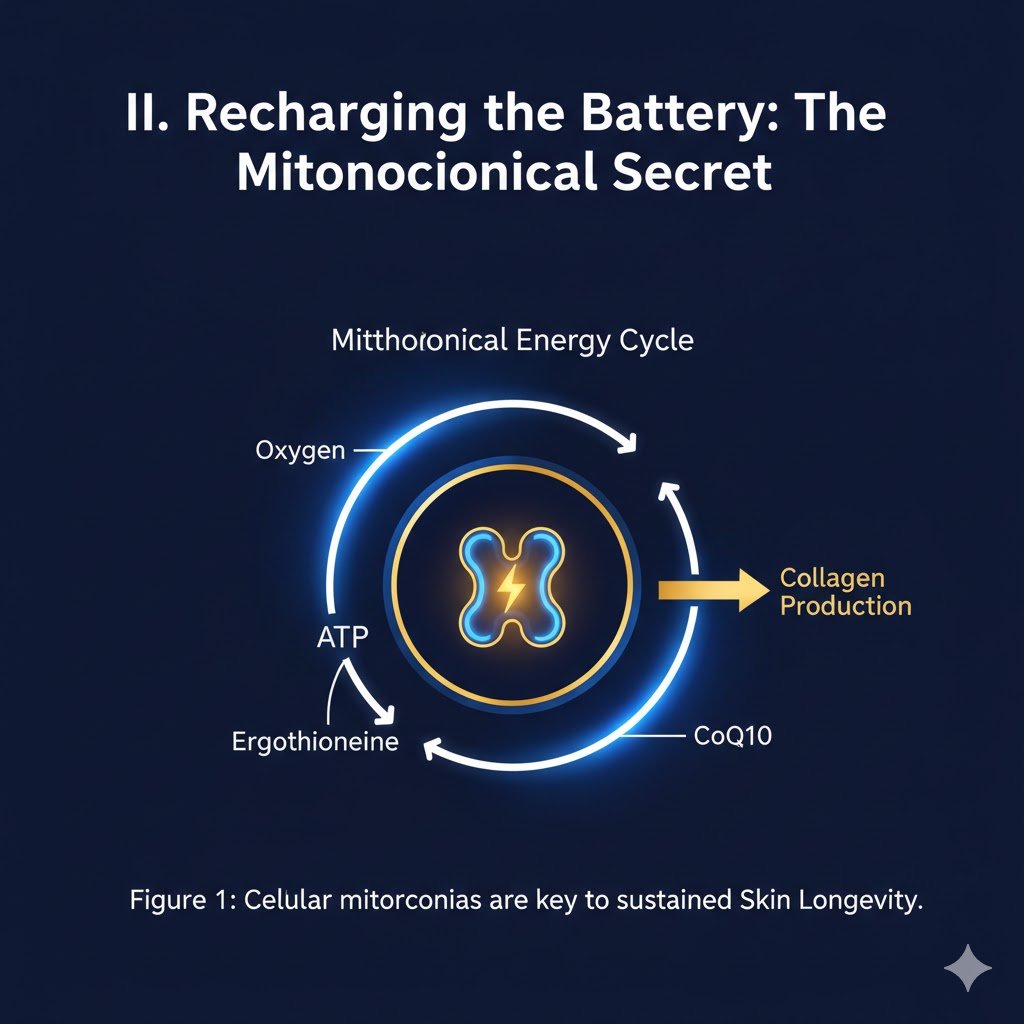
Why does a 20-year-old’s skin heal in two days while a 40-year-old’s skin takes two weeks? It’s the ATP (Adenosine Triphosphate) levels.
For anyone serious about Skin Longevity, ATP is the “currency” your cells use to produce collagen and repair barrier disruption. In my audit of current 2026 formulations, I look for “Mitochondrial Chargers” like Ergothioneine and Methylene Blue. These aren’t just buzzwords; they are molecules that help the cell’s power plant work more efficiently, ensuring long-term Skin Longevity.
- Scientific evidence on Mitochondrial Energy and Dermal Repair (NIH/PubMed) confirms that without energy, your skin cannot regenerate.
The DNA Librarian: NAD+ and Genomic Integrity

Your skin’s DNA is like a massive instruction manual. Every time you go out in the sun, a few pages of that manual get torn. NAD+ is the librarian that repairs those pages.
Supporting skin longevity through topical NAD+ for skin repair is the ultimate move for 2026. Without NAD+, your cells lose the “instructions” on how to stay firm and elastic. True biological age reversal starts with DNA health. I recommend looking into NMN (Nicotinamide Mononucleotide) topicals, which act as a direct fuel source for these DNA repair enzymes, further extending your skin longevity.
Glycation: The Invisible Enemy of Skin Longevity
If “Zombie Cells” are the office workers who won’t leave, Glycation is the rust on the office equipment. In the USA, our high-sugar diets and environmental stressors lead to Advanced Glycation End-products (AGEs).
Think of your collagen fibers like flexible rubber bands. Glycation turns them into brittle, rusted sticks. Once collagen is “caramelized” by sugar, it snaps. This is the biological reality of “Sugar Sag.” To achieve true skin longevity, your routine must include “Anti-Glycation” agents like Aminoguanidine or Carnosine. These molecules act as a shield, preventing the sugar in your bloodstream from “rusting” your dermal matrix. In my lab reviews, I’ve found that even the most expensive exosome treatments fail if the patient’s internal glycation levels are too high.
The “Daily Habit” Approach (Relatable & Practical)

| Phase | Goal | Key “Bio-Stack” Ingredients | Why It Works (The Science) |
| Morning: Energy & Protection | Defend the Mitochondrial “Battery” | Vitamin C (SAP/THD) + Coenzyme Q10 | Neutralizes UV-induced free radicals before they can drain cellular energy, preserving your Skin Longevity. |
| Evening: Clearing & Signaling | “Flush” the System of Zombie Cells | Senolytic Peptides or Bakuchiol | Removes accumulated “cellular debris” and signals the skin to begin structural repair while you sleep. |
| The “Bio-Stack” Accelerator | 3x Results via ATP Stimulation | 1070nm Red Light Therapy | Acts as a “wireless charger” for mitochondria, providing the fuel needed for Skin Longevity ingredients to work. |
Beyond the Surface: Can We Reset the Epigenetic Clock?
One of the most exciting (and often misunderstood) areas of my research is the Epigenetic Clock. While your “Chronological Age” is fixed by the calendar, your “Biological Age” is surprisingly flexible. In our skin longevity audit, we look at DNA Methylation—essentially the “volume knobs” that turn your young genes down and your old genes up.
Environmental stressors like UV rays and pollution aren’t just damaging cells; they are “turning down” your collagen production genes. However, the 2026 data shows that we can actually nudge those knobs back. By using Sirtuin activators and specific DNA repair enzymes, we aren’t just preventing damage; we are attempting to signal the skin to behave like a younger version of itself.
This is the pinnacle of skin longevity. It’s the shift from “defensive” skincare to “offensive” cellular reprogramming. When you see a researcher talking about “reversing” skin age, they are talking about this-optimizing the epigenetic signals so your skin forgets it’s supposed to be thinning. This isn’t science fiction anymore; it’s the new baseline for anyone serious about their long-term skin longevity results.
The Reality Check: Why We’re Playing the ‘Long Game’
Let’s be honest with each other: Skin Longevity isn’t about looking like a filtered version of yourself for a Saturday night party. It’s about something much deeper. It’s about making sure that when you’re in your 50s, 60s, and beyond, your skin still has the “biological bounce” to protect you, heal itself, and feel healthy.
We need to stop chasing the “anti-aging” dragon. That dragon is a myth sold to us by brands that want us to feel insecure about every new birthday. Instead, I’m asking you to start investing in your cellular health.
When you focus on the mitochondria—the actual engines of your cells—you aren’t just painting over the cracks in a house; you are reinforcing the foundation. That is the only way to achieve true, lasting skin longevity. It’s not a sprint; it’s a commitment to your future self. Your skin doesn’t need a miracle; it needs a researcher’s respect and the right cellular fuel.
Top 10 Questions on Skin Longevity & Bio-Stacking
1. What is the ‘Skin Longevity’ age gap?
The age gap is the difference between your chronological age and your skin’s biological age. By optimizing mitochondrial ATP, you can effectively narrow this gap, making skin behave years younger than the calendar suggests.
2. Can NAD+ serums really penetrate the skin barrier?
Standard NAD+ molecules are large, but 2026 formulations use liposomal delivery or precursors like NMN and NR that bypass the barrier to trigger internal DNA repair enzymes (PARPs).
3. Does sugar truly ‘rust’ my collagen?
Yes. This process is called Glycation. Sugar molecules attach to collagen fibers, creating Advanced Glycation End-products (AGEs) that make skin brittle and prone to sagging.
4. How do Senolytics help with skin thinning?
Senolytics target and remove ‘Zombie Cells’ that stop dividing but secrete inflammatory signals. Removing them stops the ‘contagious’ aging of surrounding healthy cells, preserving skin thickness.
5. Why 1070nm for Red Light Therapy?
While 660nm is great for the surface, 1070nm (near-infrared) reaches deeper into the hypodermis to stimulate the densest populations of mitochondria for maximum energy output.
6. Is Bakuchiol actually as strong as Retinol for longevity?
Bakuchiol offers similar gene-expression results to Retinol but without the ‘inflammaging’ (inflammation-driven aging) that can sometimes occur with retinoid irritation.
7. What is ‘Skin Lag’ and how do I fix it?
Skin Lag is a slow recovery time for creases or wounds. It is fixed by boosting ATP energy. If your skin takes hours to bounce back from sleep creases, your mitochondrial battery is low.
8. Can dietary supplements impact skin longevity?
Yes. Supplements like Spermidine, Resveratrol, and Urolithin A have been shown in researcher audits to support autophagy (cellular cleanup) from the inside out.
9. How does pollution affect the Epigenetic Clock?
Pollution triggers ‘epigenetic noise,’ essentially confusing your skin cells so they forget to produce collagen. Anti-pollution shields are mandatory for longevity in urban areas.
10. Does a Skin Longevity routine replace my dermatologist?
No. This routine supports and maintains the results of professional treatments. It is the ‘daily maintenance’ that ensures your clinical procedures last 3x longer.
About The Author
