
Medical Review & Transparency
Resourced & Compiled by: Atul Kumar (Skincare Researcher)
Last Updated: February 5, 2026
Safety Note: We’re talking about At-home exosome skincare (topical stuff). If someone tries to sell you an “at-home injectable,” run the other way. We keep it safe and science-backed here at Skincare Mantra.
I’m going to be real with you-I’ve spent the last month going down a total research rabbit hole. My eyes are blurry from reading 2026 clinical whitepapers because I was tired of seeing my friends spend $300 on “exosome serums” that are basically just expensive water.
If you’ve been following my journey, you know I’m obsessed with fixing “Skin Lag.” That’s that deflated, hanging look you get after losing weight or just when your collagen decides to take a permanent vacation. We talked about this in my Post-Ozempic Facial Recalibration guide, but today we’re talking about the secret weapon: At-home exosome skincare.
The “Signal Leak” is why your face looks tired

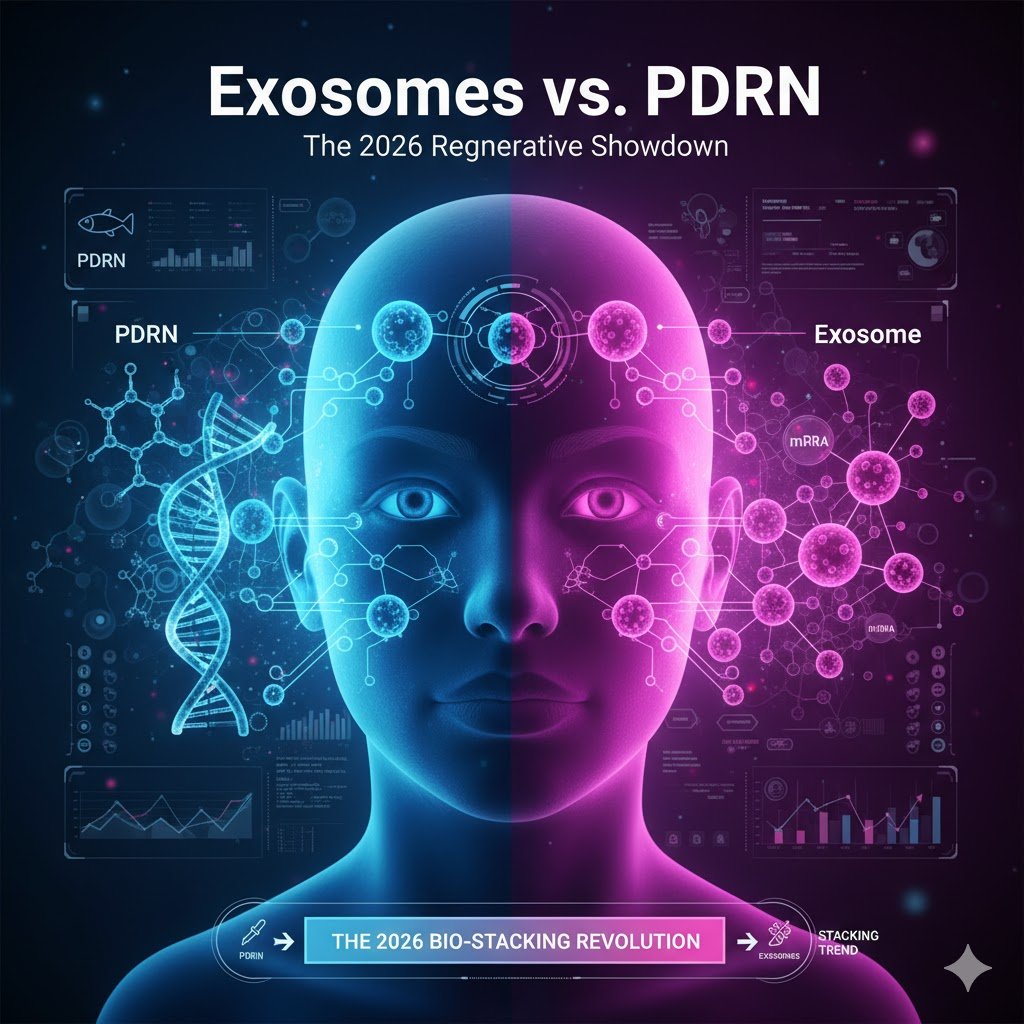
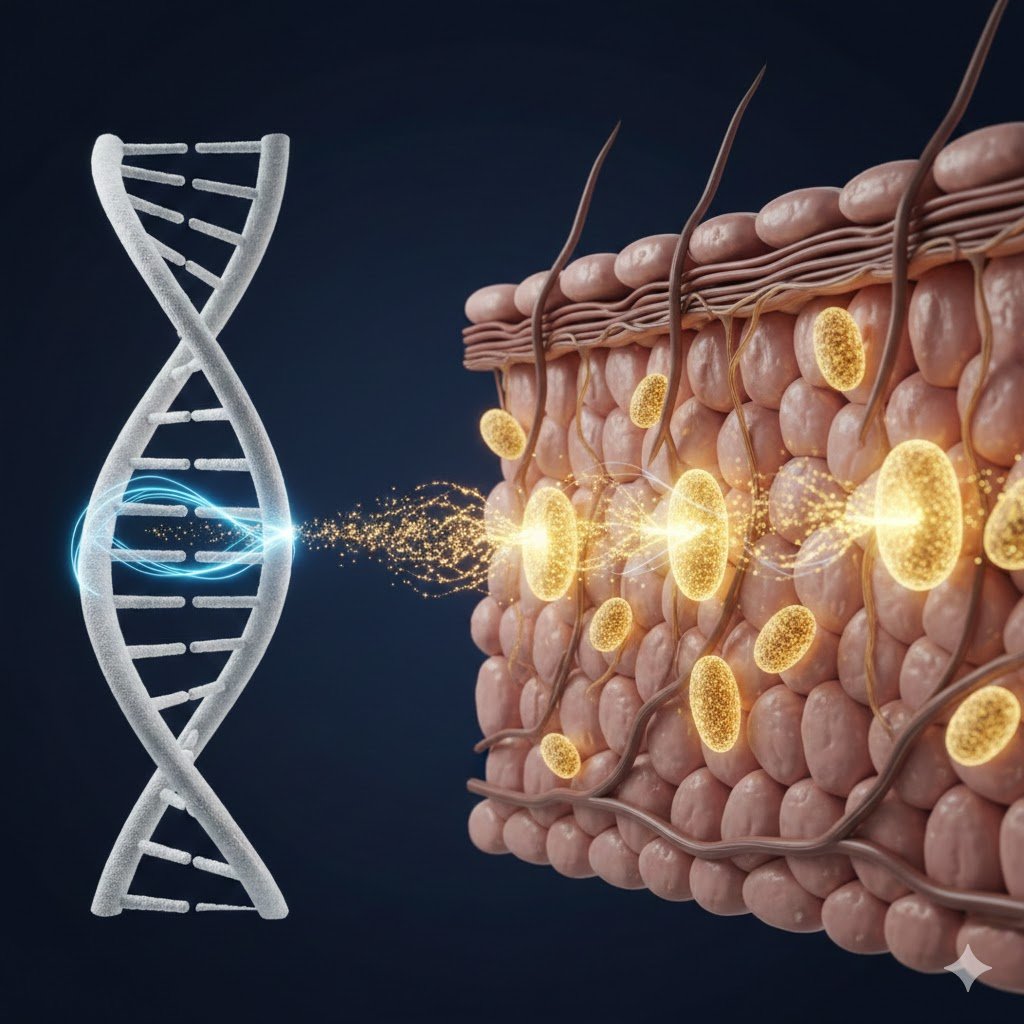
Most people think their skin is just “old.” It’s not. It’s just quiet. Your cells have stopped talking to each other. I call this “Signal Leak.” You get a fancy $1,500 treatment at the clinic, you look great for a week, and then the signal fades. At-home exosome skincare is basically like putting a 5G signal booster in your bathroom. It’s not just a moisturizer; it’s a tiny bubble (a nanovesicle, if we’re being nerdy) that carries a “work order” to your cells telling them to start building collagen again.
The Cold Chain: The “Dirty Secret” of the industry
Here’s the part where I might get in trouble with some brands. Exosomes are fragile. They are like fresh milk—if they get hot, they’re done. I’ve seen so many people buying At-home exosome skincare from big department stores where the bottles sit under hot lights. Those exosomes are dead. In 2026, the only stuff I trust is “Lyophilized.” That’s just a fancy word for freeze-dried. You get a little vial of powder and a vial of liquid, and you mix them yourself. If it doesn’t “snap” when you activate it, you aren’t getting the real mRNA signal.
We aren’t just ‘fixing’ skin anymore; we are re-programming it. At-home exosome skincare is the bridge between a surgical lift and a basic cream. It’s the daily ‘text message’ your cells need to stay awake.”
How I “Bio-Stack” My Routine (The Real Way)
Don’t follow those 10-step routines. They’re a waste of time. I use what I call “Bio-Stacking.” It’s about layers that actually talk to each other.
| The Layer | What I use | Why I do it |
| 01: The Signal | At-home exosome skincare | MUST go on first. If you have oil on your face, the nanovesicles can’t get in. |
| 02: The Fuel | Mitochondrial / NAD+ Mist | Gives the cells the “battery power” to do what the exosomes ordered. |
| 03: The Bricks | PDRN (Salmon DNA) | Order received, power is on… now the PDRN provides the actual material to build. |
| 04: The Seal | Lipid Barrier Cream | Seals the “signal” in so 2026 pollution doesn’t kill the vibe. |
The “Skin Lag” Crisis: Why Traditional Creams Can’t Fix a Biological Deficit
If you’ve spent any time on my blog, you know I’ve been obsessed with Post-Ozempic Facial Recalibration. When you lose weight fast, your face doesn’t just lose fat; it loses the structural tension that keeps everything “up.” This is where the At-home exosome skincare conversation gets really interesting.
Most people think they need a face-lift, but often, the skin just needs to be “retaught” how to hold its shape. In 2026, we’ve learned that exosomes actually target the fibroblasts specifically responsible for “Skin Lag.” While a moisturizer just sits on top, these signaling vesicles are like a tailored suit for your face—they help the tissue “shrink-wrap” back to the muscle.
If you are currently on a GLP-1 journey, you shouldn’t wait until the sagging happens. Starting a signaling routine during weight loss is the 2026 “Pro-Move” to prevent the deflation before it starts.
The Brand Face-Off: Who is Actually Winning the 2026 Exosome War?

I’m not sponsored by any of these guys, so I’m going to give it to you straight. There are three big names you’ll see in 2026, and they are not created equal.
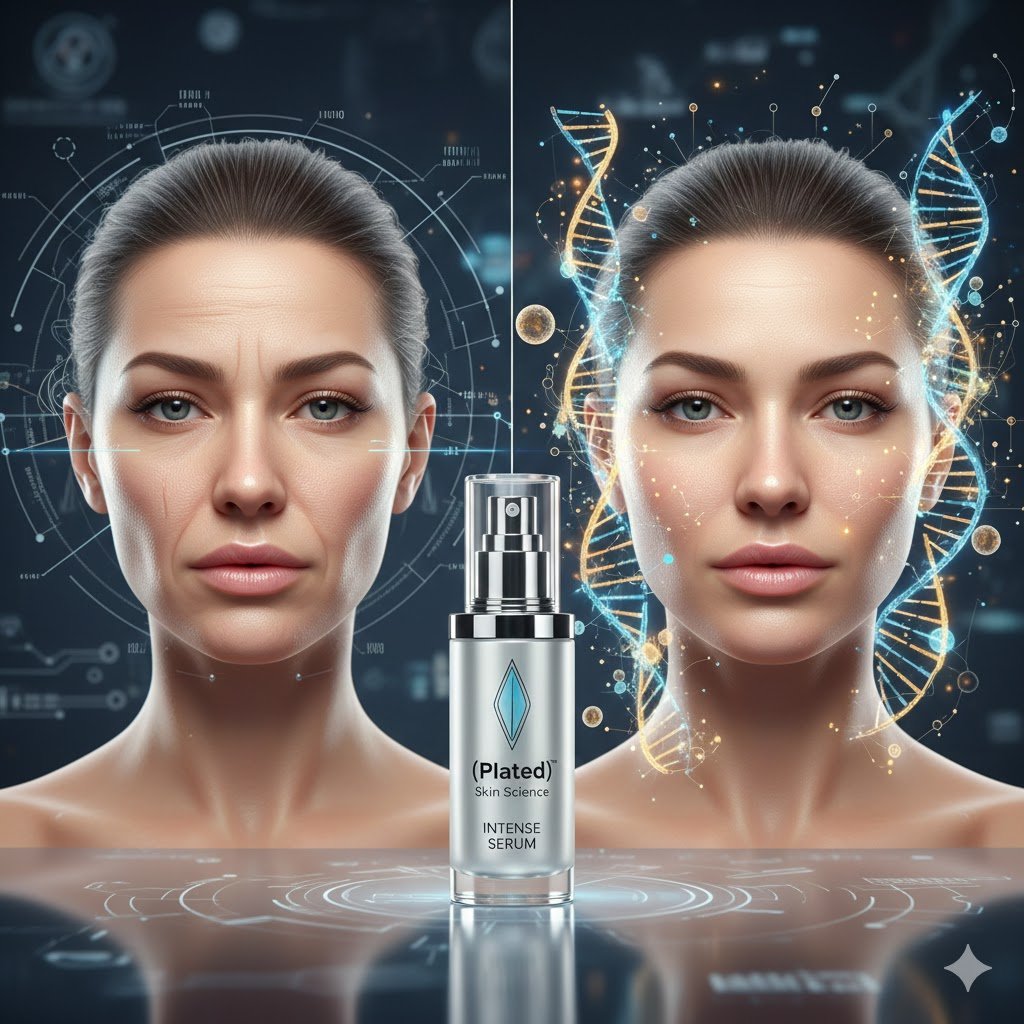
- The “Gold Standard” (Plated/Rion): These are the ones I call the “High-Science” brands. They use a proprietary process to keep the exosomes stable at room temperature. It’s expensive, but if you want the real mRNA signal, this is where you put your money.
- The “Hybrid” (Rejuran): They are famous for PDRN, but their 2026 exosome line is a “Biostimulatory Stack.” They mix the salmon DNA with the vesicles. It’s a 1-2 punch that I personally love for barrier repair.
- The “Budget” Fakes: If you see “Exosome Serum” for $45 on a generic marketplace, please, just buy a nice dinner instead. There is no way to stabilize these biologicals at that price point. You’re likely just buying a basic peptide serum with a fancy label.
The Cost-Benefit Analysis: Is a $300 Serum Cheaper than a $5,000 Laser?
Let’s talk numbers, because I know your bank account is watching. A full At-home exosome skincare protocol will run you about $250 to $400 for a 30-day supply of the “real” stuff.
- The Clinic Route: $1,200 – $1,800 per session (usually need 3).
- The Home Route: $3,000 per year for high-end signaling.
In 2026, many of my readers are finding that they can skip the middle session of their Morpheus8 or Fraxel treatments by just being insanely consistent with their at-home signaling. You aren’t just buying a cream; you’re buying “Procedure Insurance.” If you spend $1,000 on a laser and don’t use exosomes after, you’re only getting 50% of the results you paid for.
The “Human” Side: Dealing with the “Purge”
I have to warn you about one thing: the “Biological Purge.” When you start using At-home exosome skincare, your cells start working overtime. For some of us, that means a few tiny whiteheads or a bit of “activity” in the first week. Don’t panic. This isn’t a breakout from a clogged pore; it’s your skin “cleaning house.”
I almost quit in week two because my skin felt “busy,” but by day 21? The glow was unlike anything I’ve ever seen from a Retinol. It’s a deeper, more “lit-from-within” look that you can’t fake with highlighter.
Wait, does it actually fix the “hanging” skin?
If you’re looking for a miracle in 24 hours, go get filler. But if you want your skin to actually shrink-wrap back to your face, at-home exosome skincare is the only way. It’s a slow burn. It takes about 90 days because you’re waiting for a biological shift, not just a physical fill. I’ve seen it work on “Skin Lag” cases that surgeons said were “hopeless” without a knife.
The “Lab Stuff” (If you want the proof)
I don’t expect you to just take my word for it. Check out this NCBI study on Exosomes in Regenerative Aesthetics. It explains exactly how these little vesicles contain the bioactive “cargo” that tells your cells to stop aging and start repairing. It’s the primary reason I stopped relying solely on basic Retinols and switched to biological signaling—it’s just a more sophisticated way to talk to your skin.
About The Author